Why Structured Reading Intervention Matters
Learn why structured reading intervention is essential for struggling readers and children with dyslexia. This parent-friendly guide explains how evidence-based, individualized instruction supports reading development and confidence. Designed for families seeking dyslexia programs and reading intervention services in Amman, Jordan, including expat and international communities.
Why Structured Reading Intervention Matters for Struggling Readers and Children with Dyslexia
When a child struggles to learn to read, families often experience worry, confusion, and many unanswered questions. This is especially true for expat and international families who may be navigating a new school system or unfamiliar educational terminology. One term you may hear is structured reading intervention. Understanding what this means—and why it matters—can help families make informed, confident decisions about their child’s learning.
This article explains structured reading intervention in a clear, reassuring way and explores why it is particularly important for struggling readers and children with dyslexia.
What Is Structured Reading Intervention?
Structured reading intervention is a targeted, evidence-based approach designed to support children who are not making expected progress in reading. Unlike general tutoring or extra homework support, structured intervention focuses on how reading works and how the brain learns written language.
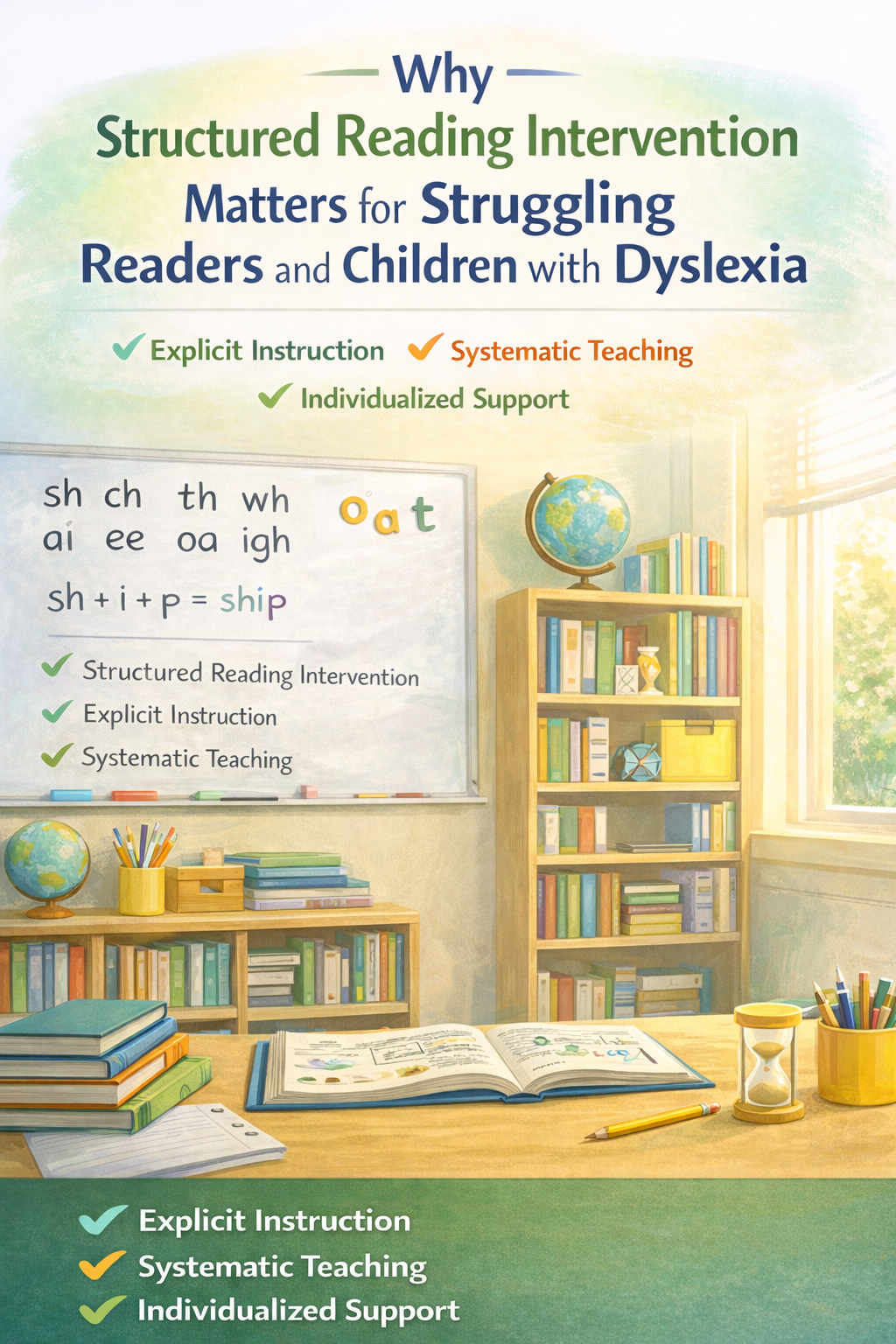
Key features of structured reading intervention include:
Explicit instruction – skills are taught clearly and directly
Systematic and sequential teaching – concepts are introduced in a logical order
Individualized lessons – instruction is adjusted based on the child’s specific needs
Ongoing assessment – progress is monitored and instruction is refined accordingly
Rather than providing more practice with the same materials, structured intervention teaches the foundational skills that reading depends on.
How Structured Intervention Differs from General Tutoring
Many families try tutoring as a first step, and tutoring can be helpful for some children. However, general tutoring often focuses on completing assignments, improving grades, or practicing reading aloud without addressing underlying skill gaps.
Structured reading intervention is different because it:
Targets root causes of reading difficulty, not just symptoms
Focuses on foundational language skills, not memorization
Builds skills step by step, ensuring understanding before moving forward
For children who struggle with reading, especially those with dyslexia, this distinction is critical.
Reading Difficulties Are Not About Effort or Intelligence
One of the most important messages for families to hear is this:
Reading difficulties are not caused by laziness, lack of motivation, or low intelligence.
Many struggling readers are bright, curious, and hardworking. Their challenges often stem from language-based differences in how the brain processes sounds, symbols, and written words.
Common areas of difficulty include:
Phonological and phonemic awareness – recognizing and manipulating sounds in spoken language
Decoding – accurately reading unfamiliar words
Spelling (encoding) – translating sounds into written letters
Fluency – reading with accuracy, appropriate speed, and confidence
Structured reading intervention addresses these areas directly, giving children the tools they need rather than expecting them to “figure it out” on their own.
Why Structured Intervention Is Essential for Children with Dyslexia
Dyslexia is a language-based learning difference that affects how individuals process written language. Children with dyslexia often struggle with decoding, spelling, and fluency despite appropriate instruction and effort.
Structured, evidence-based approaches—such as structured literacy and Orton-Gillingham–based instruction—are especially effective for students with dyslexia because they:
Teach sound-symbol relationships explicitly
Use systematic progression from simple to complex skills
Incorporate multisensory techniques (seeing, hearing, saying, and writing)
Provide frequent review and guided practice
These approaches do not remove dyslexia, but they help students build accurate reading skills and develop strategies that support long-term success.
Importantly, structured intervention also benefits other struggling readers, even those without a formal diagnosis. Many children who have gaps in foundational skills respond well to clear, structured instruction.
Gently Addressing Common Misconceptions
“My Child Will Catch Up Eventually.”
Some children do improve with time, but many struggling readers do not “catch up” without targeted support. Early, structured intervention can prevent years of frustration and help children build confidence sooner.
“More Reading Practice Is Enough.”
Reading exposure is valuable, but for children with underlying skill gaps, practice alone is often insufficient. Without explicit instruction, repeated reading can reinforce confusion rather than build understanding.
“Intervention Means Something Is Wrong.”
Needing intervention does not mean a child is incapable or behind forever. It simply means they learn differently and benefit from instruction designed to meet their needs.
The Emotional Impact of Reading Difficulties
Beyond academics, reading struggles can affect a child’s self-esteem and willingness to participate in school. Children may begin to avoid reading, feel anxious about classroom tasks, or compare themselves negatively to peers.
Structured reading intervention supports not only skill development but also emotional well-being by:
Making learning predictable and achievable
Celebrating small, meaningful progress
Helping children experience success through understanding
Over time, this structured support often leads to increased confidence and motivation.
When to Seek Professional Guidance
If you notice ongoing reading difficulties—such as slow progress, guessing at words, difficulty spelling, or avoidance of reading—it may be helpful to seek professional guidance. A trained reading specialist can assess your child’s skills, identify specific needs, and recommend appropriate intervention.
For families in Jordan, Structured Literacy Center offers one-to-one structured literacy intervention and assessment services in Amman, Jordan. Professional support can provide clarity, direction, and a clear plan for moving forward.
A Reassuring Final Thought
Every child deserves instruction that matches how they learn. Structured reading intervention provides struggling readers and children with dyslexia the clarity, structure, and support they need to make meaningful progress.
If you have concerns about your child’s reading development, reaching out for guidance is a positive and proactive step. With the right support, children can build strong reading skills, regain confidence, and develop a more positive relationship with learning—skills that will support them well beyond the classroom.